Trade Wars End When Politicians Lose Power, Not When They Negotiate
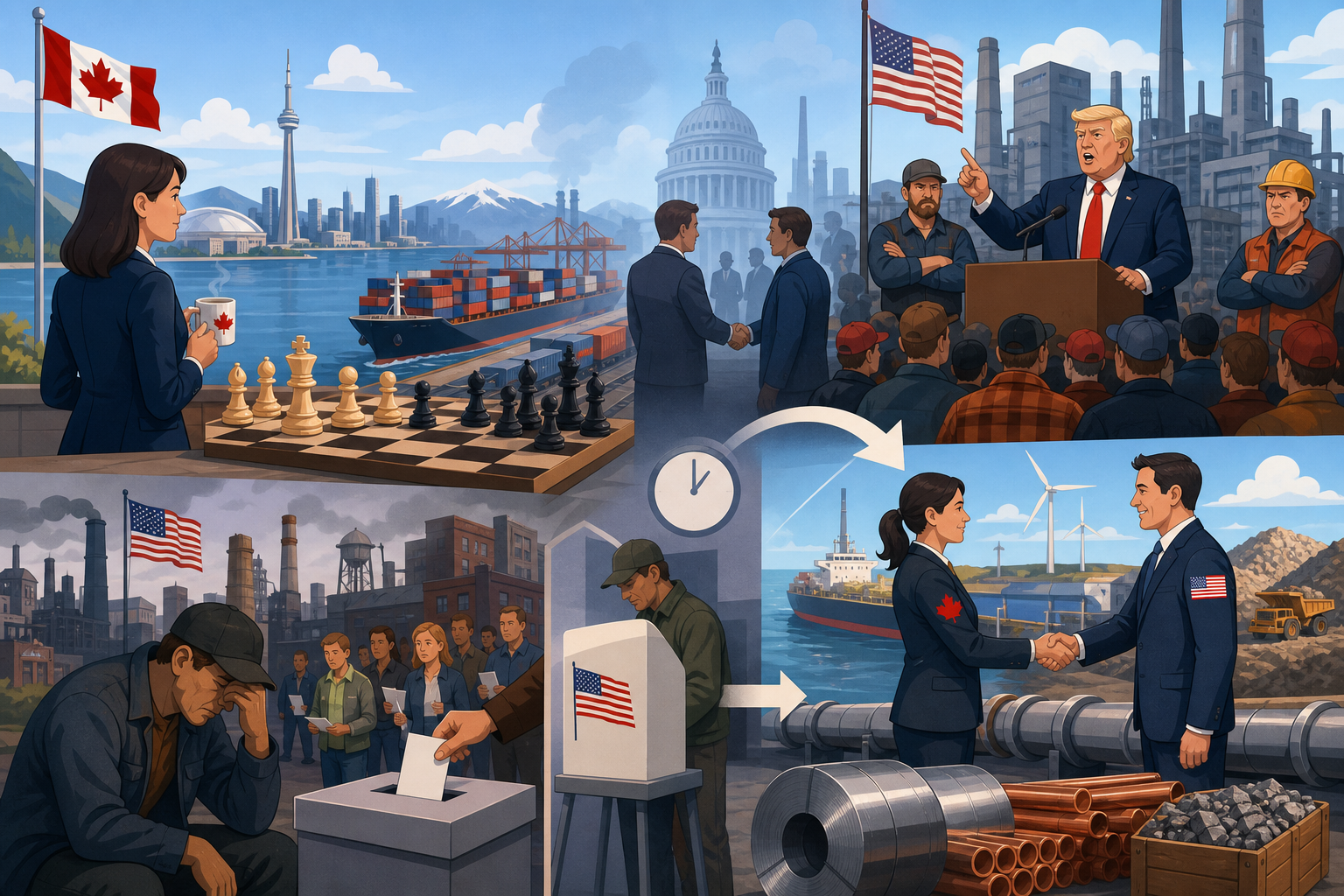
In March 2025, Canada slapped a C$29.8 billion retaliatory tariff package on U.S. goods after Washington imposed 50% duties on Canadian steel. By August 2026, Canada's counter-tariff on American steel sat at the same 50%, and bilateral trade flows that normally run $3.6 billion CAD daily had begun clogging. The two countries were locked in a negotiation stalemate that could drag into 2027, but the war won't end at a table. It'll end when the arithmetic inside a Pennsylvania governor's race or a Michigan Senate primary starts leaning the other way.
The Electoral Clock Matters More Than the Trade Deficit
U.S. protectionist measures follow domestic electoral cycles far more reliably than they follow trade data. Section 232 national security tariffs and Section 301 unfair-practice findings get announced in election years because they play well in specific swing districts. They get rolled back when the same districts start reporting job losses in industries that depend on cross-border supply chains, and a primary challenger spots an opening. Canada remains the top export market for 27 U.S. states. That creates a coalition of business lobbies, chambers of commerce, and state legislators who start making noise the moment tariffs begin costing their constituents real money. The tariffs don't vanish because Canada made a better argument. They vanish because the domestic cost in Ohio or Wisconsin exceeded the political benefit.
The Canada-U.S.-Mexico Agreement mandates a joint review in 2026, which is being treated as a high-stakes negotiating moment. It isn't. The review is scheduled. The outcome depends on whether the party in power still finds protectionism useful by the time the calendar turns. If a Rust Belt governor's race swings on auto-sector layoffs caused by parts shortages, the tariffs will be gone before the formal review opens. If inflation numbers stay high and get blamed on trade disruption, same result. The negotiation theater exists to provide political cover for a decision that was already made domestically.
Interdependence Is the Lever
Canada's strongest bargaining chip is not its own tariffs or its ability to retaliate in kind. It's the structural integration of the two economies, particularly in sectors where U.S. supply chains have no short-term substitute. Energy is the clearest case. Canada supplies a large share of U.S. oil and electricity imports, and the pipelines, refineries, and power transmission systems required to replace that supply don't exist. A sustained disruption would spike prices in states that vote. Critical minerals follow the same logic. Tariffs on Canadian exports create immediate domestic inflation in the U.S. industrial base that depends on those inputs.
The North American auto sector is stitched together so tightly that a single vehicle's parts often cross the border six or seven times before final assembly. A 10% across-the-board tariff on Canadian goods is effectively a tax on Michigan and Ohio production. The economic pain lands on the same voters who were supposed to benefit from the protectionist stance. That's not a flaw in the policy. That's the mechanism that kills it.
Canada's best move is often the one that keeps it out of the headlines. Let the U.S. Chamber of Commerce and state-level business federations do the lobbying in Washington. Let the inflation data speak for itself. The Canadian government doesn't need to "win" the argument publicly. It needs to wait for the electoral correction to arrive, which it always does, because the arithmetic eventually stops working for the side that started the fight.
The 2026 CUSMA review will get framed as the pivot point. The real pivot is the next round of U.S. midterms.



In March 2025, Canada slapped a C$29.8 billion retaliatory tariff package on U.S. goods after Washington imposed 50% duties on Canadian steel. By August 2026, Canada's counter-tariff on American steel sat at the same 50%, and bilateral trade flows that normally run $3.6 billion CAD daily had begun clogging. The two countries were locked in a negotiation stalemate that could drag into 2027, but the war won't end at a table. It'll end when the arithmetic inside a Pennsylvania governor's race or a Michigan Senate primary starts leaning the other way.
The Electoral Clock Matters More Than the Trade Deficit
U.S. protectionist measures follow domestic electoral cycles far more reliably than they follow trade data. Section 232 national security tariffs and Section 301 unfair-practice findings get announced in election years because they play well in specific swing districts. They get rolled back when the same districts start reporting job losses in industries that depend on cross-border supply chains, and a primary challenger spots an opening. Canada remains the top export market for 27 U.S. states. That creates a coalition of business lobbies, chambers of commerce, and state legislators who start making noise the moment tariffs begin costing their constituents real money. The tariffs don't vanish because Canada made a better argument. They vanish because the domestic cost in Ohio or Wisconsin exceeded the political benefit.
The Canada-U.S.-Mexico Agreement mandates a joint review in 2026, which is being treated as a high-stakes negotiating moment. It isn't. The review is scheduled. The outcome depends on whether the party in power still finds protectionism useful by the time the calendar turns. If a Rust Belt governor's race swings on auto-sector layoffs caused by parts shortages, the tariffs will be gone before the formal review opens. If inflation numbers stay high and get blamed on trade disruption, same result. The negotiation theater exists to provide political cover for a decision that was already made domestically.
Interdependence Is the Lever
Canada's strongest bargaining chip is not its own tariffs or its ability to retaliate in kind. It's the structural integration of the two economies, particularly in sectors where U.S. supply chains have no short-term substitute. Energy is the clearest case. Canada supplies a large share of U.S. oil and electricity imports, and the pipelines, refineries, and power transmission systems required to replace that supply don't exist. A sustained disruption would spike prices in states that vote. Critical minerals follow the same logic. Tariffs on Canadian exports create immediate domestic inflation in the U.S. industrial base that depends on those inputs.
The North American auto sector is stitched together so tightly that a single vehicle's parts often cross the border six or seven times before final assembly. A 10% across-the-board tariff on Canadian goods is effectively a tax on Michigan and Ohio production. The economic pain lands on the same voters who were supposed to benefit from the protectionist stance. That's not a flaw in the policy. That's the mechanism that kills it.
Canada's best move is often the one that keeps it out of the headlines. Let the U.S. Chamber of Commerce and state-level business federations do the lobbying in Washington. Let the inflation data speak for itself. The Canadian government doesn't need to "win" the argument publicly. It needs to wait for the electoral correction to arrive, which it always does, because the arithmetic eventually stops working for the side that started the fight.
The 2026 CUSMA review will get framed as the pivot point. The real pivot is the next round of U.S. midterms.
Sources
Read Next
7 Essential Checks Before You Buy in 2026: Building Confidence Through the Numbers
Getting Lenders to Count 80% of Your Gross Rent: A Checklist
820 Low-Rise Homes, 129 Condos: The GTA Slump Belongs to Speculators
200 Basis Points or 2 Percentage Points: Same Stress Test, Clearer Wording