The U.S. Steel Tariff Hit 50% in August, But Manufacturers Who Locked August Contracts Pay Tariffs at September Rates
A fabricator in Vaughan placed an order for 200 tons of hot-rolled coil on August 18, locked in delivery for August 22, 2026 15, and congratulated himself on timing the market. The steel crossed the border September 9. A 50% U.S. tariff on Canadian steel had been in effect since August 22. His August contract price held. The tariff assessment applied at the September rate instead.
Customs and Border Protection doesn't care when you signed the purchase order. It cares when the goods entered U.S. territory. The 50% tariff on Canadian steel took effect August 22, 2026, as part of the broader 50% rate imposed on certain Canadian goods on that same date. A contract signed in August protects your negotiated price per ton. It does nothing about the duty you pay when the shipment clears customs in September.
The Contract Covers Price, Not Duty
Most cross-border steel contracts specify an Incoterm that governs who pays freight, insurance, and risk of loss. Almost none of them assign tariff liability. That stays with the importer of record, which in most cases is the buyer. The seller delivered exactly what was promised: steel, at the August price, F.O.B. Hamilton. What the U.S. government charges you to receive it is a separate line item, assessed at the rate in force on the date of entry.
The timing gap creates the problem. A manufacturer ordering structural steel in mid-August, with a four-week lead time, expected delivery under the prior regime. The tariff doubled while the steel was in transit or sitting in a yard waiting for trucking. The August contract becomes a September import, and September imports pay September's rate.
Why Advance Orders Didn't Help
The instinct to front-run a tariff increase makes sense. Order early, lock the price, get ahead of the higher cost. Except the cost that matters is the one assessed at entry, and entry happens when CBP says it happens, not when you signed, not when it shipped, not when the invoice was cut. For steel moving by truck from Southern Ontario into Michigan or New York, that's the moment the shipment crosses the checkpoint. For rail, it's when the railcar is released into U.S. territory. A purchase order dated August 20 gives you no tariff advantage if the goods clear in September.
The August contracting wave happened because buyers thought locking the unit price would lock their landed cost. It didn't. The seller's obligation ended at delivery. The tariff is the buyer's problem, calculated at entry, and entry dates are harder to control than order dates. A delay of two days, a rescheduled truck, a missed rail slot, a paperwork hold, turns an August hedge into a September liability.
What Actually Determines the Rate You Pay
CBP uses the date of entry, which is the date the shipment is presented for clearance and released into U.S. commerce. For most Canadian steel moving by truck, that means the day the truck crosses and the paperwork is filed. A manufacturer who ordered August 18 for delivery September 5 paid the old rate if the truck crossed September 7. If it crossed September 9, the 50% tariff imposed on August 22 applied at entry.
There is no grace period for contracts signed under the old rate. There is no exemption for goods in transit when the increase took effect. The tariff applies to the entry, not the order. A signed contract establishes the price between buyer and seller, but CBP calculates duties based on the date your shipment clears customs, and no contract changes that.
The August contracts are still enforceable. The steel will be delivered at the agreed price. The buyer will pay what the seller invoiced. Then the buyer will pay the U.S. government 50% of the customs value, because that's the rate that was live when the shipment entered.


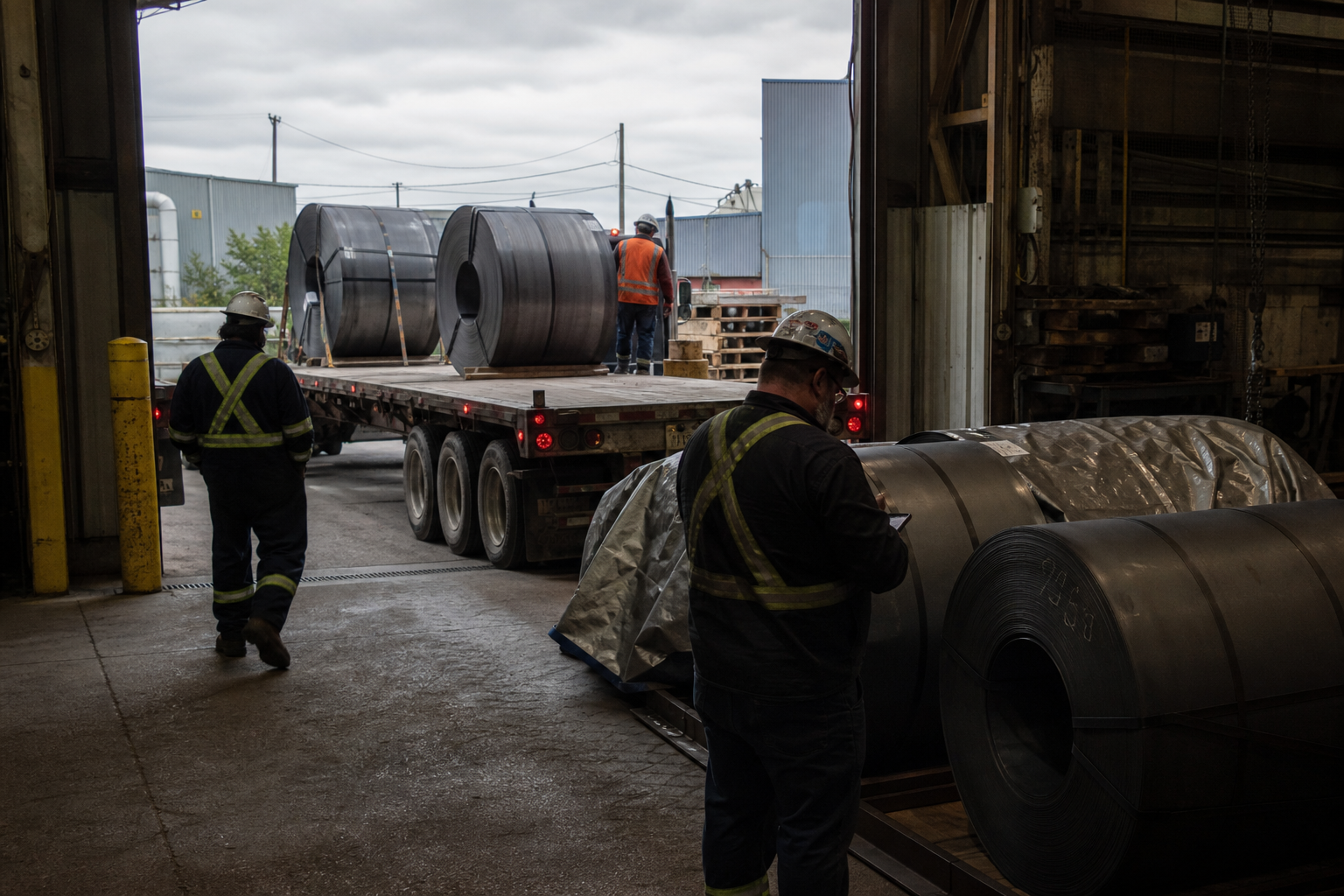

A fabricator in Vaughan placed an order for 200 tons of hot-rolled coil on August 18, locked in delivery for August 22, 2026 15, and congratulated himself on timing the market. The steel crossed the border September 9. A 50% U.S. tariff on Canadian steel had been in effect since August 22. His August contract price held. The tariff assessment applied at the September rate instead.
Customs and Border Protection doesn't care when you signed the purchase order. It cares when the goods entered U.S. territory. The 50% tariff on Canadian steel took effect August 22, 2026, as part of the broader 50% rate imposed on certain Canadian goods on that same date. A contract signed in August protects your negotiated price per ton. It does nothing about the duty you pay when the shipment clears customs in September.
The Contract Covers Price, Not Duty
Most cross-border steel contracts specify an Incoterm that governs who pays freight, insurance, and risk of loss. Almost none of them assign tariff liability. That stays with the importer of record, which in most cases is the buyer. The seller delivered exactly what was promised: steel, at the August price, F.O.B. Hamilton. What the U.S. government charges you to receive it is a separate line item, assessed at the rate in force on the date of entry.
The timing gap creates the problem. A manufacturer ordering structural steel in mid-August, with a four-week lead time, expected delivery under the prior regime. The tariff doubled while the steel was in transit or sitting in a yard waiting for trucking. The August contract becomes a September import, and September imports pay September's rate.
Why Advance Orders Didn't Help
The instinct to front-run a tariff increase makes sense. Order early, lock the price, get ahead of the higher cost. Except the cost that matters is the one assessed at entry, and entry happens when CBP says it happens, not when you signed, not when it shipped, not when the invoice was cut. For steel moving by truck from Southern Ontario into Michigan or New York, that's the moment the shipment crosses the checkpoint. For rail, it's when the railcar is released into U.S. territory. A purchase order dated August 20 gives you no tariff advantage if the goods clear in September.
The August contracting wave happened because buyers thought locking the unit price would lock their landed cost. It didn't. The seller's obligation ended at delivery. The tariff is the buyer's problem, calculated at entry, and entry dates are harder to control than order dates. A delay of two days, a rescheduled truck, a missed rail slot, a paperwork hold, turns an August hedge into a September liability.
What Actually Determines the Rate You Pay
CBP uses the date of entry, which is the date the shipment is presented for clearance and released into U.S. commerce. For most Canadian steel moving by truck, that means the day the truck crosses and the paperwork is filed. A manufacturer who ordered August 18 for delivery September 5 paid the old rate if the truck crossed September 7. If it crossed September 9, the 50% tariff imposed on August 22 applied at entry.
There is no grace period for contracts signed under the old rate. There is no exemption for goods in transit when the increase took effect. The tariff applies to the entry, not the order. A signed contract establishes the price between buyer and seller, but CBP calculates duties based on the date your shipment clears customs, and no contract changes that.
The August contracts are still enforceable. The steel will be delivered at the agreed price. The buyer will pay what the seller invoiced. Then the buyer will pay the U.S. government 50% of the customs value, because that's the rate that was live when the shipment entered.
Sources
Read Next
7 Essential Checks Before You Buy in 2026: Building Confidence Through the Numbers
Getting Lenders to Count 80% of Your Gross Rent: A Checklist
820 Low-Rise Homes, 129 Condos: The GTA Slump Belongs to Speculators
200 Basis Points or 2 Percentage Points: Same Stress Test, Clearer Wording